
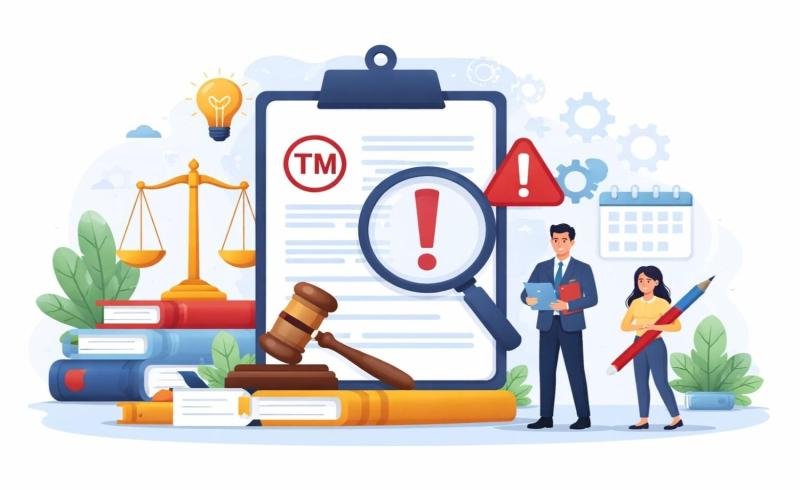
Trademarks are very important for businesses in India to protect their identity, reputation, and goodwill. However, getting the approval of your trademark may not always be easy. One of the common obstacles is getting a trademark objection, especially under Section 11 of the Trademark Act. If you understand this objection, the reasons, how to reply, and the timelines, you can save a lot of your time, money, and energy.
In case you want to register your brand, getting professional guidance is a must. Many times, businesses look for Registration under Section 12 A first, which is very helpful in organizing all the legal formalities. AABK & Associates is a place with professionals who can help you in this process and is located at a very convenient location in Delhi, making trademark registration easier and more dependable.
A trademark objection is essentially a red flag raised by the Trademark Office when an application doesn’t fully comply with Section 11(1) of the Trademark Act or other applicable provisions. It indicates that your proposed mark may:
Receiving an objection doesn’t mean the end of the road. It’s an opportunity to clarify, modify, or provide evidence supporting your application.
Trademark objections typically arise under Section 11 of trademark act, which lays down grounds for refusal of registration. The most common causes include:
Section 11(1) of trademark act specifically provides the grounds on which a trademark application may be refused. These include:
Essentially, this section protects consumers and business owners alike by ensuring that trademarks do not create unfair advantages or mislead the public.
For businesses in Delhi, professional assistance from firms like AABK & Associates can help navigate Section 11 objections, prepare accurate documentation, and strengthen the case for registration.
It’s important to differentiate between a trademark objection and a trademark opposition procedure:
Understanding this distinction helps you take timely action and avoid unnecessary delays.
Receiving an objection doesn’t automatically cancel your application. Here’s a step-by-step guide to replying effectively:
Tip: Companies like AABK & Associates in Delhi provide specialized assistance in drafting replies, especially under Registration under Section 12 A, ensuring your application meets legal and procedural requirements.
Here’s what you can typically expect:
Proper planning and prompt action significantly reduce delays, keeping your brand protection on track.
While small businesses may attempt to navigate section 11(1) of trademark act on their own, expert guidance improves success rates. Key benefits include:
For local businesses, engaging Trademark Registration Company in Mayur Vihar, Trademark Registration Company in Shahdara, or a trusted firm like AABK & Associates ensures smooth, hassle-free registration.
Following these tips reduces the likelihood of objections under Section 11 of trademark act, saving time and legal costs.
A trademark objection under section 11 of the Trademark Act is a usual step in the filing process.
The best way to get your mark registered is to understand the reasons, follow the time limits, and write good answers. They will all help you get approved.
In case you're a company based in Delhi, AABK & Associates can provide you with professional support for a smooth and efficient SCT12A Registration and all other proceedings.
Their expert help can be a great time saver, a stress-relieving factor, and can keep you clear of legal hitches if you let them draft your replies, handle objections, or ensure compliance.
Protect your brand now!
Reach out to AABK & Associates, the best Trademark Registration Company in Shahdara and Mayur Vihar, who can help come through section 11 trademark act objections and give you a registered trademark with confidence.