

Registration of a trust in India is a basic requirement for any person or organisation intending to engage in social welfare, charity, religion, or community uplift. A well-registered trust enjoys the advantages of legal acceptance, transparency, and trustworthiness, thereby making it easier for the trust to receive donations, manage property, and conduct its affairs. Be it a public charitable trust, a private trust, or a family trust, it is a must to know the right way to register the trust. In this blog, we will take you through the complete process, step by step, including the necessary documents, legal formalities, and compliance requirements for registering a trust in India, so you can be sure it is legally registered.
A trust is a legal instrument in which the asset owner, called the author or settlor, conveys property, money, or resources to another person or class of persons (trustees) for administration and the benefit of specific individuals or the public (beneficiaries). AABK & Associates, known for CA in Shahdara, can help people, NGOs, and organisations with the entire trust registration process, documentation, and compliance, making sure your trust is recognised by law and operates without issues.
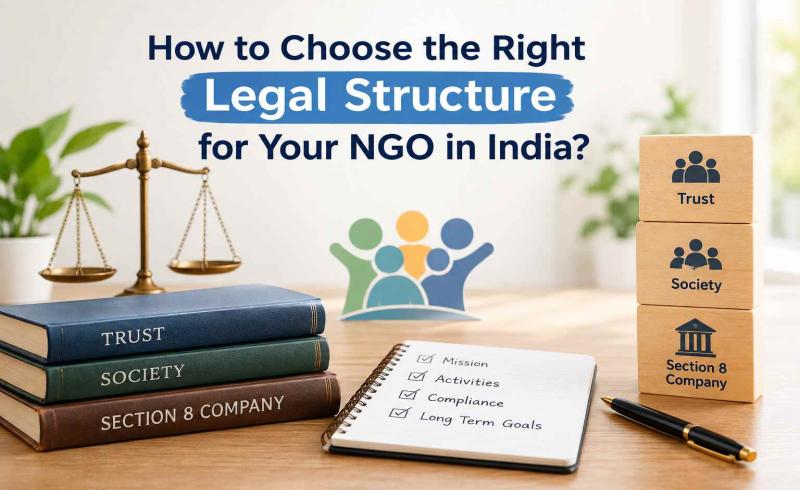
In India, trusts are broadly classified into the following categories:
Public Charitable Trust: Established for the good of the public and playing a part in education, healthcare, relief work, and community development, etc.
Private Trust: A trust formed exclusively for the benefit of certain persons or families. This type of trust is usually sought for asset protection.
Support for Religious Community Trust: This type of trust is established to fund and maintain temples, religious congregations, and spiritual activities.
Private Religious Trust: The trust that limits religious activities to a particular group, family, or community.
Ancestral or Family Trust: It is a trust that will protect family estates, properties, or business interests for future generations through a legally secure entity.
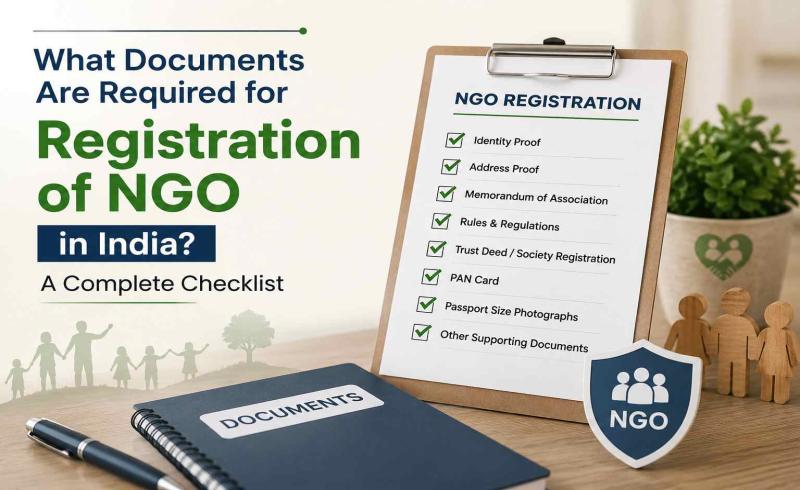
Trust Deed: The paper lists the trust's name, objectives, information about the settlor, trustees, and beneficiaries, and how the assets are managed.
Identity Proofs: The desired documents could be an Aadhaar Card, PAN, Passport, Voter ID, or Driving License.
Proof of Address: A utility bill, ration card, etc., can only be considered proof if the address is stated on the document.
Proof of Registered Office Address: The most commonly accepted documents include an electricity bill, a rental contract, property ownership documents, and, for rented premises, a landlord's consent letter.
Photographs: Passport-size photographs must be submitted by the settlor and trustees.
Stamp Paper for Trust Deed: It should comply with the stamp duty requirements of the relevant state.
PAN Application for Trust: It is a must after the trust registration process.
Trust Bank Account Opening Documents: They are required for financial transactions and the management of donations.
The Indian Trusts Act, 1882, governs the trust registration process in India, which is a series of legal and documentation steps. AABK & Associates, CA in Shahdara has simplified the following process to ensure smooth and hassle-free registration of a trust:
Trust Name: It must be a name that is entirely different from any existing trust and does not contain any prohibited terms without permission.
Trustee & Beneficiary Decision: The decision regarding the trust creator (settlor or founder), the trustees who manage the trust, and the beneficiaries (who may be the general public or specific individuals) must be made.
Trust Deed Drafting: A Trust Deed must be drafted to be legally effective and must include the trust's purposes, governing rules, trustees' powers, the property involved, and management rules.
Stamp Paper: The Trust Deed must be stamped and executed on the proper stamp paper, as stamp duty rates vary by state.
Visit the Sub-Registrar's Office: The settlor and witnesses must visit the Sub-Registrar's office to sign, provide fingerprints, and register the trust deed.
Trust Registration Certificate Issued: After verification, the trust is registered, and the registered Trust Deed, along with a certified copy, is issued.
Apply for PAN & Bank Account: A trust must register for a PAN card and open a bank account specifically for the trust, so that financial transactions, donations, and funding can be conducted transparently and managed efficiently.
For smooth and accurate trust registration in India, it is critical to choose the right legal and compliance partner, and AABK & Associates has no rival expertise in this area. Our group of certified CAs in Shahdara and legal professionals with diverse backgrounds ensures that the trust deed is drafted accurately, that all paperwork is error-free, and that the entire registration procedure complies with the Indian Trusts Act, 1882. Our professional CA in Shahdara supports you at every step from selecting a name and drafting the deed to coordinating with the Sub-Registrar, applying for PAN, and setting up the bank account. With our transparent fee structure, prompt processing, and dependable guidance, we enable NGOs, charitable institutions, and families to set up trusts with complete legal clarity and confidence. AABK & Associates guarantees a smooth, legally compliant registration experience, whether you are forming a public charitable trust, a private family trust, or a religious trust.
Initiate the Trust Registration process in India through the effortless legal service of AABK & Associates. Our expert CA in Shahdara is there for you throughout the whole process, from drafting a trust deed to handling the documentation and ensuring compliance. Get in touch with us now to start the procedure.