
When I speak with business owners, one question comes up repeatedly: what is protected under trademark law, and what isn’t? It sounds simple, but the answer sits inside a detailed legal framework shaped by IP law, court decisions, and evolving brand practices. In India and globally, trademark law helps businesses secure their brand identity, gain exclusive rights, and avoid infringement risk.
At AABK & Associates, I’ve seen startups, SMEs, and even established companies misunderstand trademark rules, often leading to trademark rejection or even legal violation. This guide breaks things down clearly so you understand Trademark law: what is protected, what cannot be trademarked, and how to build strong trademark protection from day one.
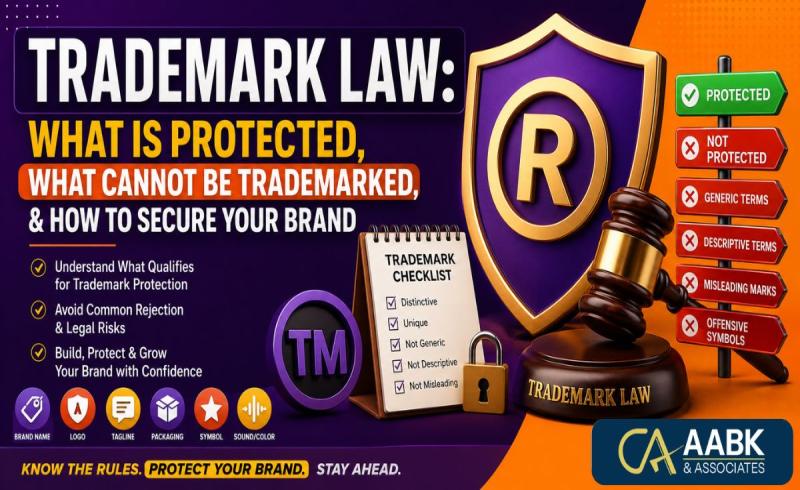
Trademark law exists to provide legal protection to distinctive identifiers that separate one business from another. If you’re wondering what is protected under trademark law, the answer generally includes anything that uniquely identifies your goods or services in the marketplace.
In India, under the Trade Marks Act, 1999, protection is granted to marks that are distinctive and capable of graphical representation. Authorities like the Controller General of Patents, Designs and Trade Marks (India) evaluate applications based on trademark eligibility requirements and compliance with trademark rules.
Common examples include:
These elements help create a registered mark that gives the trademark owner exclusive rights to use it commercially. Globally, organisations like the United States Patent and Trademark Office, World Intellectual Property Organisation, and European Union Intellectual Property Office follow similar principles, reinforcing consistent IP protection standards.
Understanding Examples of trademark protection helps clarify how brand protection works in real life.
For instance, a distinctive brand name combined with a unique logo ensures strong trademark rights. This reduces infringement risk and strengthens your market presence. On the other hand, weak or generic branding can result in a denied application or even an invalid trademark.
If you’re going through Company Registration or planning GST Registration Services, aligning your trademark early ensures long-term legal protection. Businesses that skip this step often face disputes later, especially in competitive sectors.
At this stage, it’s worth remembering that what is protected under trademark law depends heavily on distinctiveness. A creative, unique identity always stands a better chance of approval than a descriptive term.
This is where most confusion arises. While many elements qualify for protection, several things that cannot be trademarked often lead to trademark rejection.
To understand what can be trademarked and what cannot, we must first look at what qualifies. A mark must be distinctive, non-generic, and not misleading.
Here’s a simple table explaining eligibility:
Marks that meet these conditions enjoy stronger trademark rights and are easier to enforce legally.
Certain categories automatically fall under things that cannot be trademarked due to legal and ethical restrictions:
Using such elements increases the chances of a denied application or future legal disputes. If your mark lacks originality, it may be classified as a weak mark, offering little real brand protection.
At AABK & Associates, I often guide businesses, especially startups working with a CA in East Delhi, to refine their brand name before filing. This small step can prevent long-term legal issues.
Again, what is protected under trademark law depends not just on creativity but also on compliance with the legal framework governing IP law.
Once you understand Trademark Protection Explained, the next step is execution. Securing a registered mark involves a structured filing process and careful planning.
The process begins with a trademark search to ensure your desired mark is not already registered. After that, you submit your application under the appropriate class of goods or services.
Steps include:
This process is governed by Indian trademark law and aligned with global IP protection practices. Working with a professional Trademark Registration Company significantly reduces errors and speeds up approval.
Even with proper filing, risks remain. Businesses must actively protect their trademarks to avoid misuse or infringement.
Common risks include:
To avoid these issues, I recommend:
Understanding what is protected under trademark law also means recognizing what is not protected and planning accordingly. Businesses that ignore this distinction often face costly disputes later.
At a broader level, strong trademark protection builds trust. It signals professionalism, ensures brand protection, and enhances your business value in the long run.
Trademark law is more than just a registration process; it’s a strategic tool for securing your business identity. From understanding trademark eligibility requirements to avoiding common pitfalls like generic term usage or descriptive term errors, every step matters.
Throughout this guide, I’ve explained what is protected under trademark law, how to identify eligible elements, and what cannot be trademarked. The goal is simple: help you secure exclusive rights, avoid legal risks, and build a strong, protected brand.
At AABK & Associates, we work closely with businesses to simplify complex legal processes and ensure complete compliance from trademark search to final registration. Whether you’re launching a startup or expanding your brand, the right legal guidance makes all the difference.
If you’re ready to protect your brand identity and secure long-term legal protection, connect with us today or visit our Google Business Profile to learn more about our expert services.